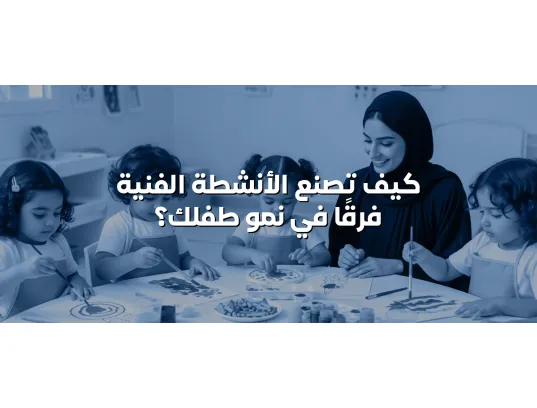
How Do Artistic Activities Make a Difference in Your Child’s Development?
Have you ever noticed how artistic activities of all kinds—whether drawing, music, theater, or others—affect your child?
Artistic activities are not merely a form of entertainment; they are a window through which children express their thoughts and emotions. They play a significant role in developing a child’s personality and skills.
In this article, we will discuss:
- The importance of arts for children
- The benefits of artistic activities for children
- The importance of incorporating artistic activities into a child’s daily routine
- The impact of artistic activities on academic achievement
- How nurseries can enhance these skills
- Frequently Asked Questions (FAQs)
What Is the Importance of Arts for Children?
Arts are not simply a form of entertainment, as some may think. They are a comprehensive educational and developmental tool that helps children grow both internally and externally.
Through artistic activities, children learn how to think, express themselves, and create in their own unique way.
When a child engages in activities such as drawing or coloring, they are doing much more than creating pictures. They are developing their imagination, strengthening their memory, and improving their concentration and problem-solving abilities.
Art provides children with a safe space to express their emotions freely, helping them channel their energy in positive and healthy ways.
Arts also teach patience, attention to detail, and the ability to appreciate beauty in the world around them.
For this reason, artistic activities have become an essential part of early childhood education programs. At Kayan, we integrate artistic activities into our educational curriculum because they cultivate thinking skills, self-confidence, and imagination—the foundation for future learning and success.
Benefits of Artistic Activities for Children
Developing Cognitive Skills and Creative Thinking
When children draw or create shapes with clay, they are actually training their minds to think, analyze, and solve problems.
Recent studies have shown that children who regularly participate in artistic activities demonstrate stronger creative thinking and problem-solving abilities. A European study conducted in 2020 found that artistic engagement supports cognitive flexibility and innovation.
Art encourages children to imagine solutions and balance colors, ideas, and designs—skills they will need throughout their education and future lives.
Developing Fine Motor Skills
Holding a paintbrush, using scissors, or shaping clay all help strengthen the small muscles in the hands and fingers.
These fine motor skills are essential for learning to write and perform everyday tasks independently.
Building Self-Confidence
Every time a child completes an artwork, they experience a sense of accomplishment and pride.
This feeling boosts self-confidence and encourages them to try new experiences.
Even if the final result is simple, what matters is that the child feels their effort is appreciated and their ideas are valued.
Encouraging Emotional Expression
Children often struggle to describe their emotions with words, but they can communicate them through colors, shapes, and artistic expression.
Drawing and creative play help children release feelings of stress, anxiety, or fear in a safe and comforting way, supporting their emotional well-being.
Improving Communication and Cooperation
When children participate in group art activities at nursery school, they learn how to communicate, exchange ideas, and respect the opinions of others.
These experiences nurture teamwork and strengthen social skills.
The Importance of Incorporating Artistic Activities into a Child’s Daily Routine
When children participate in artistic activities throughout the day, they engage in experiences that combine concentration, self-expression, and social interaction.
Sharing artistic activities with your child creates opportunities for bonding and strengthens communication through play. It encourages conversation, curiosity, and exploration.
In a nursery setting, arts-based activities create a flexible learning environment that encourages discovery, collaboration, and respect for others’ ideas.
Regular participation in artistic activities helps children become more prepared for learning and better able to regulate and express their emotions in healthy ways. This positively impacts their behavior and self-confidence.
Artistic activities give children the space they need to develop into well-rounded individuals who combine intelligence, creativity, and emotional balance.
The Impact of Artistic Activities on Academic Achievement
Arts help improve concentration and attention—two essential factors for academic success.
Research has shown that children who participate in artistic programs are often better prepared for academic learning because their minds become more adaptable and capable of organizing thoughts and information.
How Can a Nursery Enhance These Skills?
The role of a modern nursery extends beyond academic instruction. It provides a comprehensive environment that supports all aspects of a child’s development.
When a nursery offers regular artistic activities, it helps children:
- Discover their unique talents and abilities.
- Express themselves with confidence.
- Develop logical and creative thinking skills.
- Achieve a healthy balance between learning and enjoyment.
For these reasons, Kayan includes weekly art sessions as part of its educational programs to ensure children benefit from a comprehensive and enriching learning environment.
Frequently Asked Questions (FAQs)
Does a Child Need to Participate in Artistic Activities?
Yes. It is recommended that children engage in artistic activities at least twice a week, whether at nursery school or at home.
Are All Children Talented in Art?
Not necessarily. Not every child will become an artist, but every child can benefit from artistic experiences and use them to develop valuable skills and abilities.
What If My Child Refuses to Participate?
Yes, this can happen. Start with simple and enjoyable activities without forcing participation, such as free coloring or finger painting, until your child becomes comfortable with the experience.
How Can I Connect Art with Learning?
Art can be easily integrated into education. For example, children can draw scenes from a story after reading it or create artwork related to one of the four seasons.
Conclusion
Artistic activities for children are not merely a luxury or a form of entertainment—they are a genuine investment in a child’s future and holistic development, including cognitive, emotional, and social growth.
Recent studies, including findings published in Educational Review (2024), indicate that integrating arts into education has become an essential component of creating a healthy and balanced learning environment.
Giving children the opportunity to express themselves freely through colors, sculpting, or other forms of artistic expression is not a luxury. It is a crucial step toward nurturing creative, adaptable minds capable of critical thinking.
Research consistently shows that children learn more effectively when they feel safe and free to experiment. Artistic activities provide exactly that environment—one where children are encouraged to explore without fear of mistakes or failure.
Over time, these simple creative experiences develop into lasting thinking skills and positive behavioral habits.
When children face future challenges—whether a difficult academic problem or a stressful life situation—they draw upon the same mental flexibility they developed while coloring, creating with their hands, or bringing imaginative ideas to life.